
Travel

Luxury Travel PR FAQs: Media Edition
In the ever-evolving world of luxury travel, PR plays a pivotal role in shaping brand perception, driving awareness and influencing consumer decisions. With luxury travel brands seeking to capture the attention of affluent travelers, media strategies must be both innovative and highly effective. Below, we address some of the most frequently asked questions about media relations in the luxury travel PR space.
What is the difference between earned vs. paid media?
Earned media refers to the publicity or coverage a brand receives organically, usually through press mentions in articles. This type of media is "earned" through efforts such as building strong relationships with journalists, crafting compelling stories and generating buzz around a product or service. It’s often considered more credible because it comes from third-party sources. On the other hand, paid media involves paying for advertising space or an advertorial to promote content directly. This can include sponsored content, display ads or paid partnerships with media outlets. While paid media offers more control over messaging and reach, earned media tends to have greater long-term value due to its authenticity and trustworthiness. Both earned and paid media play vital roles in a luxury travel PR strategy, with a balanced approach ensuring maximum brand exposure and consumer engagement.

What is the importance of press trips in luxury travel PR?
Press trips are essential in the luxury travel PR world. These trips provide journalists and influencers with first-hand experience of the destination, hotel or service being promoted, on an individual or group basis. Press trips offer an invaluable way for media professionals to experience the offerings first-hand, creating stories that are rich in detail and engagement. It often results in the brand getting more substantial and valuable media coverage that might not be achievable otherwise.
What types of media outlets will you target for my brand?
The media outlets we target depend on your brand's objectives and the type of coverage you're seeking. For luxury brands, we focus on premium outlets, both traditional and digital, including high-end travel magazines, lifestyle publications, influential blogs, and top-tier broadcast networks. We also target niche platforms and influencers who can reach your ideal demographic. The goal is to identify media outlets that have the most influence over your target audience.
What do travel journalists look for in a pitch?
Travel journalists value pitches that are relevant, timely and bold. They look for clear story angles that fit their audience such as hidden gems, new openings, cultural experiences, standout luxury offerings or destination alternatives. Strong pitches are concise, well-structured and supported by high-quality visuals or access opportunities. Journalists also appreciate exclusivity, credibility and practical details that make it easy to turn a pitch into an engaging article.
How important are visuals to support media relations?
Visuals are paramount. High-quality, aspirational imagery is key to conveying the allure of the destination or product. Whether it’s a stunning sunset over a private beach or a beautifully designed hotel suite, visuals are often what captures the media’s attention and entices potential travelers. Journalists use visuals in their stories to elevate the content and make it stand out.
What is the difference between a press release and a press kit?
A press release is a single, newsworthy announcement that shares a specific update, such as a product launch, company milestone or event, with the media in order to generate coverage. Whilst a press kit (also called a media kit), is a collection of materials that provides journalists with broader background information about a brand. It often includes a company overview, executive bios, product details, logos, images and past press releases. In short, a press release communicates one piece of news, while a press kit equips the media with everything they need to write a more comprehensive story.
How can the success of media coverage be measured?
Media coverage can be measured through a combination of metrics, including circulation numbers (print) or monthly unique users (online), ad value, PR value and overall sentiment. This means you can gauge how many readers have been exposed to the piece. There can also be an assessment on how the coverage aligns with your brand’s messaging and the quality of the outlets covering your story. Media reports and trackers can be created to showcase how media coverage translates into brand visibility and ultimately, consumer action.
How long will it take to see results from media outreach?
The timeline for seeing media results can vary depending on several factors, including the news agenda, the level of media interest and the complexity of the campaign. Typically, it can take anywhere from a few weeks to a few months to secure meaningful media coverage. However, it’s important to note that PR is a long-term investment and building strong relationships with the media takes time. The goal is always to ensure steady, consistent coverage over time to maintain a brand’s visibility.
You can contact us to discuss our services in more detail HERE
#Luxury #Travel #PR #FAQs: #Media #Edition



Food for Thought: Gourmet Getaways For Harvest Season
SEPTEMBER 2025: Harvest season is underway so it’s time to turn the spotlight on the rich variety of global flavours being served up across the world. From the sun-soaked shores of Greece, to creole influenced island cuisine, this curated roundup celebrates exceptional dining experiences. The list features not only standout properties, but also the chefs behind them who are redefining destination dining. Guests are invited to discover the world through their taste buds.
UK: Foodie Road Trip Through Cornwall with roadsurfer

For a road trip that blends jaw-dropping coastal views with some of the UK’s best culinary experiences, roadsurfer makes exploring Cornwall as easy as it is delicious.
This six-day itinerary though Cornwall begins and ends in Bristol, covering 320 miles of foodie highlights. Kick off in Bude with an award-winning pasty from The Cornish Bakery, then head to Padstow for a seafood feast in Rick Stein’s legendary restaurant. Treat yourself to Moomaid of Zennor’s creamy ice cream on the way to Penzance, where The Shore Restaurant’s daily tasting menu showcases hyper-local ingredients. In Falmouth, enjoy a traditional Cornish cream tea in the lush surrounds of Trebah Garden before heading inland to sample local vintages at Looe Valley Vineyards. Round things off with an unforgettable farm-to-table meal at Crocadon in St Mellion, where organic ingredients are grown just metres from your plate.
With fully equipped campervans featuring built-in kitchens, cosy beds, and outdoor seating, roadsurfer lets food lovers travel in comfort and cook on the go. Their wide range of vans including the compact Surfer Suite and family-friendly Roadhouse are ideal for every kind of traveller, whether you’re going solo or bringing the whole crew.
Two adults can stay in a Couple Cottage measuring 5.9 metres in length, with 4 seats sleeping 2 from £90 per night. Campervan includes a kitchenette, bathroom with warm shower and toilet and plenty of storage. Price based on September 2025 trip.
For more information, please visit: https://roadsurfer.com/uk/
High-res images available to download HERE
PORTUGAL: A New Chapter in Lisbon’s Culinary Scene Begins at Hyatt Regency Lisbon

Hyatt Regency Lisbon has opened a new chapter in the city’s dining scene. The five-star hotel has introduced refreshed menus, a new executive chef and carefully curated experiences, offering travellers a delicious way to discover the true flavours of the capital.
With sweeping views over the River Tagus, ICON Bar & Rooftop at Hyatt Regency Lisbon has launched a bold new menu celebrating Mediterranean flavours and the city’s modern culinary spirit. Highlights include sucking pig bao buns, Iberian ham with pistachios and fresh artisanal cocktails like the Golden Hour Negroni and Mystic Mule.
At the heart of Hyatt Regency Lisbon, Viseversa Bistro & Bar is now helmed by Executive Chef David Gonçalves, a Lisbon native known for his modern take on Portuguese cuisine. Chef David brings playful sophistication to the menu, honouring tradition with a contemporary twist.
Two adults can share a Standard Suite with River View from £285 per night. Price based on September 2025 stay.
For more information, please visit: https://www.hyatt.com/hyatt-regency/en-US/lishr-hyatt-regency-lisbon
High-res images available to download HERE
ALGARVE: A Taste of Portugal and Beyond: Dining at Pine Cliffs Resort
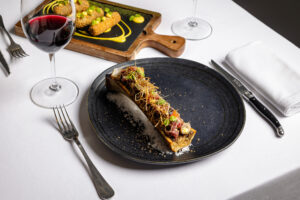
Pine Cliffs, a Luxury Collection Resort in the Algarve, offers a wealth of dining options for guests to select from its 15 diverse restaurants and bars. At the helm of Pine Cliffs’ expansive culinary programme is Executive Chef Jorge Lavos Costa, who brings over two decades of international experience and a creative, modern edge to Portuguese dishes. Chef Jorge oversees the resort’s food and beverage direction, drawing on his deep knowledge of local Algarve ingredients and global techniques.
Guests can enjoy freshly grilled seafood with Atlantic views at beachfront restaurant Maré located on Praia da Falésia, premium cuts at Piri Piri Steakhouse, authentic Italian flavours at Portofino by MIMO, a taste of India at the atmospheric Rohini or authentic fine dining at O Pescador. For an immersive culinary experience, MIMO Algarve cooking school offers hands-on workshops celebrating regional flavours and hosts Chef’s Table where original dishes are expertly paired with the finest wines.
Two adults can share a Pine Cliffs Hotel Deluxe Room with Resort View from £338 per night. Price based on September 2025 stay.
For more information, please visit: www.pinecliffs.com
High-res images available to download HERE
SAINT LUCIA: A Taste of Saint Lucia – Elevated Island Dining at Cap Maison

Perched on a dramatic bluff with sweeping views of the Caribbean Sea, Cap Maison is Saint Lucia’s premier destination for culinary sophistication. This boutique resort on the island’s picturesque north coast is a sanctuary for travellers, where food is an experience. At the acclaimed Cliff at Cap, French-West Indian fusion cuisine is elevated to new heights, complemented by an award-winning 2,000 bottle wine cellar and served on a terrace with some of the most breathtaking ocean views in the Caribbean. For something more casual, The Naked Fisherman, tucked beneath the cliffs on Smugglers Cove beach, offers a relaxed, barefoot dining vibe with a focus on freshly caught seafood, Caribbean spices and rum-infused cocktails.
Cap Maison’s culinary experiences extend far beyond the plate. Guests can dine privately on Rock Maison, a wooden deck built into the sea below the cliffs, where champagne arrives via a zip line and waves crash below. Regular culinary events, including wine pairing dinners, cooking classes, and rum tastings bring guests closer to the island’s vibrant food culture.
Two adults can share a Garden View Room on an All-Inclusive basis from £418 per night. Price based on September 2025 stay.
For further information, please visit: https://capmaison.com/
High-res images available to download HERE
MAURITIUS: Experience the Foodie Soul of Mauritius at Veranda Grand Baie
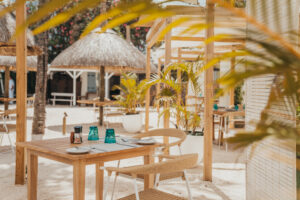
Veranda Grand Baie is a boutique hotel located close to the lively Grand Baie village, that is popular with those that like to be close to shops, restaurants and nightlife. Through its creole roots, the hotel epitomizes the finest pleasures of Mauritian island life by offering a culinary journey for the senses.
Authentic gastronomy is always a highlight in Mauritius and in Grand Baie, visitors can wander through the local markets or enjoy a food tour with Taste Buddies around the quaint seaside town. Traditional creole cuisine is served by many vendors.
Dive into a world of flavours at the resort, The Lazy Lobster promises the freshest seafood of the day right on the beach, while their communal Food Comptoir offers a lively dining experience. It’s also highly recommended to indulge in a cosy afternoon tea, a Mauritian tradition.
Two adults can share a Comfort Room from £229 per night with breakfast included in October 2025.
For further information, visit www.veranda-resorts.com/en/mauritius-hotel-veranda-grand-baie/
High-res Images are available to download HERE
MAURITIUS: Celebrate the Best of Authentic Sustainable Gastronomy at Heritage Resorts & Golf
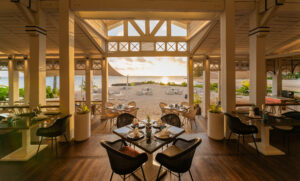
Proving that good food does not have to cost the earth, guests at Heritage Resorts & Golf in Mauritius can take part in the annual Sustainable Gastronomy Week from 6th to 11th October 2025, headlined by Jean-François Bérard, a Green Michelin Star chef from France.
This highly anticipated event on the resort’s culinary calendar promises to emphasise eco-conscious gastronomy. The week will include exclusive culinary competitions between partaking chefs, gala dinners, educational talks and immersive workshops for guests.
Prices start from £448 per night based on up to 2 adults sharing a Deluxe Garden View room during Sustainable Gastronomy Week at Heritage Awali on an all-inclusive basis or from £410 per night based on two adults sharing a Deluxe Seaview Suite in the adults-only wing at Heritage Le Telfair on a bed and breakfast basis.
For further information, please visit: www.heritageresorts.mu
High-res images available to download HERE
-ENDS-
You can read more of our blogs with insights into our clients and the industry more widely HERE
Deluxe sustainability: Wealthy investors drive demand for eco-friendly luxury homes
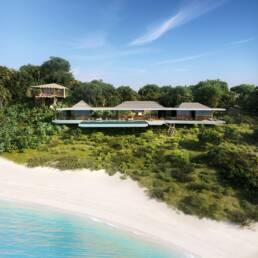
Pearns Point, a community of 71 luxury beach and oceanfront homes in Antigua, has noted a considerable uplift in buyer demand for its eco-friendly properties since the beginning of the year, confirming the growing trend of high-net-worth individuals prioritising sustainable assets in their investment strategy.

This shift is mirroring findings published in the Knight Frank Wealth Report 2025, which states that the integration of ESG (Environmental, Social and Governance) into property investment has evolved significantly. Whilst in 2024 61% of investors were looking for energy efficiency ratings and 48% for on-site renewable power, in 2025, investors are even looking beyond green certifications to the capital expenditure required to meet future sustainability related regulation (75%) and the actual energy data (47%) required to understand building performance.
Adam Gobat, Sales Director at Pearns Point, explains: “The global objective for a more sustainable future is having an evident impact on the investment strategy of high-net-worth individuals which is inevitably redefining the luxury property landscape. Whilst developers have begun incorporating eco aspects into their design, we foresee this only intensifying over the coming years in order for homes to remain an attractive investment vehicle.
“Compared to last year, we have registered more buyers who have made the eco-credentials of their properties a deciding factor. Whilst lifestyle buyers appreciate lower running costs, investors know that a sustainable property can generate higher rental returns amid a steady increase of eco-conscious travellers who favour accommodation with sustainable certification.”
To make the properties at Pearns Point a future-proof investment, the team works closely with highly-respected architectural firms such as London-based Studio RHE which has established a global reputation for creating sustainable, energy-efficient and innovative residential homes.
…/
Richard Hywel Evans, Director at Studio RHE, says: “When we first visited Pearns Point, we conducted a complete analysis of the site conditions in order to understand and harness the sites’ natural attributes to decide on position. This includes a solar path analysis to study the sun at every part of the day to create shade in the house (reduced need for cooling). We also decided to harness the trade winds as free energy using micro- generation wind turbines that send energy to central batteries whilst chilled water can be pushed around the house from solar driven pumps to provide water for heat pumps and AC cooling. Lastly, to make use of freely available natural local materials, rainwater is collected and treated by coconut shells to then irrigate the surrounding flora.”
In addition, buyers have the option for their property to store energy in battery packs and solar heaters. This allows for energy to be used and provides relief to government energy suppliers when they are over loaded whilst enabling properties to sustain themselves and their appliances during power failures.
Last but not least, to reduce its carbon footprint, Pearns Point uses local materials such as shingles and stones that help blend the properties in seamlessly with the landscape whilst the project also prioritises local labour, creating hundreds of construction jobs for Antiguans along the way.
Land Prices at Pearns Point start from US$1.6 million and built homes from US$4.2 million. To find out more, visit www.pearnspoint.com or HERE.

Stumbled the concept

Stumbled the concept
 •3 March 2017•7 Minutes
If you’re not sure how much time you are actually spending on various tasks, use a tool like Rescue Time (their free version is excellent!) which runs in the background and tracks where your time is being spent. It can even send you weekly reports so you know exactly how much time you wasted on Facebook, or spent in your email inbox! You can assign different websites or programs/applications on a scale of very distracting to very productive, so you can see at a glance things like: which days of the week you’re most productive, which times of the day you’re most productive, and the sites on which you’re spending the most distracting time. I stumbled upon the concept of margin while reading a post by Michael Hyatt, which led me to design my ideal week.
Richard Swenson, M.D. (who wrote the book: Margin: Restoring Emotional, Physical, Financial, and Time Reserves to Overloaded Lives) describes margin like this:
Last year I wrote about why booking too far in advance can be dangerous for your business, and this concept of margin so eloquently captures what I had recognized had been my problem: I was so booked up with clients that I wasn’t leaving any margin for error, growth, planning, or reflection. I wasn’t really growing my business in a sustainable way; I was just booking one client after the next. At the time this seemed like a good thing: doesn’t growing my business mean getting more clients?
What if instead of booking up to 100% capacity (which more often than not ends up being closer to 120%), we only booked up to an 80% capacity?
What if we left more room for growth (personal or professional) and stopped being one with “busy-ness”?
I spent nearly a year turning down every new project (and even getting rid of old ones) so that I could reduce my workload, build in more margin, and create what is now Digital Strategy School. It takes time to build margin into your schedule.
What could you accomplish with 20% more time?
Write a book. Create a program. Update your contracts and proposals (which has been on your to-do list for how long..?) Spend more time with your family. Go above and beyond for a client. Learn something new. Actually follow through on the things that have been nagging at you for a long time.
When you design your ideal week, you start to see that the time you think you have is often not in alignment with how much time you actually have.
After designing my ideal week, I had a much clearer idea of how to create a framework for my week that would empower me to feel more focused by theming days of the week, and even parts of the day. SO simple, I know. Some of you have been doing this for ages and you’re already a pro, and some of you who saw my schedule said “woah, that’s so rigid, I need more flexibility!”
Structure enables flexibility.
If you’re not sure how much time you are actually spending on various tasks, use a tool like Rescue Time (their free version is excellent!) which runs in the background and tracks where your time is being spent. It can even send you weekly reports so you know exactly how much time you wasted on Facebook, or spent in your email inbox! You can assign different websites or programs/applications on a scale of very distracting to very productive, so you can see at a glance things like: which days of the week you’re most productive, which times of the day you’re most productive, and the sites on which you’re spending the most distracting time. Turns out I’m consistently “in the zone” around 3pm in the afternoon; so instead of trying to tackle highly creative work first thing in the morning (when my brain is barely functioning), I handle it in the afternoon, when I know I’m at my peak!
Creating more margin has been game-changing for my business.
What would be possible for yours?


Time is passing by
CSS selectors all exist within the same global scope. Anyone who has worked with CSS long enough has had to come to terms with its aggressively global nature — a model clearly designed in the age of documents, now struggling to offer a sane working environment for today’s modern web applications. Every selector has the potential to have unintended side effects by targeting unwanted elements or clashing with other selectors. More surprisingly, our selectors may even lose out in the global specificity war, ultimately having little or no effect on the page at all.
Any time we make a change to a CSS file, we need to carefully consider the global environment in which our styles will sit. No other front end technology requires so much discipline just to keep the code at a minimum level of maintainability. But it doesn’t have to be this way. It’s time to leave the era of global style sheets behind.
It’s time for local CSS.
In other languages, it’s accepted that modifying the global environment is something to be done rarely, if ever.
In the JavaScript community, thanks to tools like Browserify, Webpack and JSPM, it’s now expected that our code will consist of small modules, each encapsulating their explicit dependencies, exporting a minimal API.
Yet, somehow, CSS still seems to be getting a free pass.
Many of us — myself included, until recently — have been working with CSS so long that we don’t see the lack of local scope as a problem that we can solve without significant help from browser vendors. Even then, we’d still need to wait for the majority of our users to be using a browser with proper Shadow DOM support.
We’ve worked around the issues of global scope with a series of naming conventions like OOCSS, SMACSS, BEM and SUIT, each providing a way for us to avoid naming collisions and emulate sane scoping rules.
We no longer need to add lengthy prefixes to all of our selectors to simulate scoping. More components could define their own foo and bar identifiers which — unlike the traditional global selector model—wouldn’t produce any naming collisions.
import styles from './MyComponent.css';
import React, { Component } from 'react';
export default class MyComponent extends Component {
 render() {
    return (
      <div>
        <div className={styles.foo}>Foo</div>
        <div className={styles.bar}>Bar</div>
      </div>
    );
  }
The benefits of global CSS — style re-use between components via utility classes, etc. — are still achievable with this model. The key difference is that, just like when we work in other technologies, we need to explicitly import the classes that we depend on. Our code can’t make many, if any, assumptions about the global environment.
Writing maintainable CSS is now encouraged, not by careful adherence to a naming convention, but by style encapsulation during development.
Once you’ve tried working with local CSS, there’s really no going back. Experiencing true local scope in our style sheets — in a way that works across all browsers— is not something to be easily ignored.
Introducing local scope has had a significant ripple effect on how we approach our CSS. Naming conventions, patterns of re-use, and the potential extraction of styles into separate packages are all directly affected by this shift, and we’re only at the beginning of this new era of local CSS.
process.env.NODE_ENV === 'development' ?
    '[name]__[local]___[hash:base64:5]' :
    '[hash:base64:5]'
)
Understanding the ramifications of this shift is something that we’re still working through. With your valuable input and experimentation, I’m hoping that this is a conversation we can have together as a larger community.
Note: Automatically optimising style re-use between components would be an amazing step forward, but it definitely requires help from people a lot smarter than me.
A day alone at the sea
Just the other day I happened to wake up early. That is unusual for an engineering student. After a long time I could witness the sunrise. I could feel the sun rays falling on my body. Usual morning is followed by hustle to make it to college on time. This morning was just another morning yet seemed different.
Witnessing calm and quiet atmosphere, clear and fresh air seemed like a miracle to me. I wanted this time to last longer since I was not sure if I would be able to witness it again, knowing my habit of succumbing to schedule. There was this unusual serenity that comforted my mind. It dawned on me, how distant I had been from nature. Standing near the compound’s gate, feeling the moistness that the air carried, I thought about my life so far.
I was good at academics, so decisions of my life had been pretty simple and straight. Being pretty confident I would make it to the best junior college of my town in the first round itself, never made me consider any other option. I loved psychology since childhood, but engineering was the safest option. Being born in a middle class family, thinking of risking your career to make it to medical field was not sane. I grew up hearing ‘Only doctor’s children can afford that field’ and finally ended up believing it. No one around me believed in taking risks. Everyone worshiped security. I grew up doing the same.
‘Being in the top will only grant you a good life’ has been the mantra of my life. But at times, I wish I was an average student. I wish decisions would have not been so straightforward. Maybe I would have played cricket- the only thing I feel passionate about. Or maybe I would have studied literature (literature drives me crazy). Isn’t that disappointing- me wishing to be bad at academics. It’s like at times I hate myself for the stuff I am good at.
This is what has happened to us. We want the things we have been doing forcefully to fail. And then maybe people around us would let us try something else or our dreams. We are accustomed to live by everyone else’s definition of success. We punish people for the things they are passionate about, just because we were unable to do the same at some point in our life.
I feel like these concrete buildings have sucked our desires and our dreams. We are so used to comfort that compromise seems like a taboo. We have lost faith in ourselves. If we can make through it right now, we can do the same in the days to come. You only need a desire to survive and nothing more- not money or cars or designer clothes.
Staying locked up in four walls have restricted our thinking. I feel like our limited thinking echoes through this wall. We are so used to schedules and predictable life that we have successfully suppressed our creative side.
When you step out of these four walls on a peaceful morning, you realize how much nature has to offer to you. Its boundless. Your thoughts, worries, deadlines won’t resonate here. Everything will flow away along with the wind. And you will realize every answer you had been looking for, was always known to you.
It would mean a lot to me if you recommend this article and help me improve. I would love to know your thoughts!

Working from your home?
01. Wake up at the same time every day.
Naturally, my first impression of these headphones is based off of the look of them. They have a classic over-the-ear style that is highlighted by a blue LED light that indicates the power for the noise canceling. The padding on the ear pieces seems adequate for extended usage periods.
They are wired headphones, but the 3.5mm stereo mini-plug cable is detachable. Something else I noticed right of the bat was the very nice carrying case that comes with them. It has a hard plastic exterior with a soft cloth interior that helps to protect the surface of the headphones from scratches. I never truly appreciated cases for headphones until I started carrying them from place-to-place. Now I can’t imagine not having a case.
It’s funny — the thing I feared would take away my “freedom” is the one thing that has allowed me to have it.
Joelle Steiniger
02. Have a routine when you wake up.
Once I gave the headphones a thorough once-over exam, I tried them on. As I mentioned, they have a classic over-the-ear style and just looking at them, the padding on the ear pieces seem adequate and the peak of the headband seemed to be a bit lacking, but you don’t really know comfort unless you try on the product. So, I slipped the headphones on and found them to be exquisitely comfortable. In order to test how voices sounded, and the overall art of sound mixing, I pulled up Netflix on my iPad Air 2 and watched a few minutes of a movie to hear all the nuances of the film. None of them were lost. In fact, I ended up hearing sounds that I hadn’t heard before. Echoes…birds chirping…wind blowing through trees…breathing of the characters…it was very impressive what the headphones ended up bringing out for me.

I’d start my day by checking email, Twitter, Facebook. Reading the “news”. I’d look at my to-do list and start working on something.
03. Plan your workout time — stick to it.
Now that I had the headphones on my head, I was finally ready to plug and play some music. I plugged the provided cable into the jack on the headphones and then the one on my iPhone 6. Then I called up Pandora. I tend to have a very eclectic music purview and have many stations set up for different moods. From John Williams to Fallout Boy, the sound quality of these headphones was remarkable. There is an amazing depth of sound and incredible highs and lows that make listening to music a truly breathtaking experience.
In order to test how voices sounded, and the overall art of sound mixing, I pulled up Netflix on my iPad Air 2 and watched a few minutes of a movie to hear all the nuances of the film. None of them were lost. In fact, I ended up hearing sounds that I hadn’t heard before. Echoes…birds chirping…wind blowing through trees…breathing of the characters…it was very impressive what the headphones ended up bringing out for me.
Distractions aside, there was no real rhyme or reason to my workflow. The not-so-fun (but necessary) stuff kept getting neglected.
04. Call it a night.
Now that I had the headphones on my head, I was finally ready to plug and play some music. I plugged the provided cable into the jack on the headphones and then the one on my iPhone 6. Then I called up Pandora. I tend to have a very eclectic music purview and have many stations set up for different moods. From John Williams to Fallout Boy, the sound quality of these headphones was remarkable. There is an amazing depth of sound and incredible highs and lows that make listening to music a truly breathtaking experience.
In order to test how voices sounded, and the overall art of sound mixing, I pulled up Netflix on my iPad Air 2 and watched a few minutes of a movie to hear all the nuances of the film. None of them were lost. In fact, I ended up hearing sounds that I hadn’t heard before. Echoes…birds chirping…wind blowing through trees…breathing of the characters…it was very impressive what the headphones ended up bringing out for me.


Trust in your intuitions
Once I gave the headphones a thorough once-over exam, I tried them on. As I mentioned, they have a classic over-the-ear style and just looking at them, the padding on the ear pieces seem adequate and the peak of the headband seemed to be a bit lacking, but you don’t really know comfort unless you try on the product. So, I slipped the headphones on and found them to be exquisitely comfortable. Once I gave the headphones a thorough once-over exam, I tried them on. As I mentioned, they have a classic over-the-ear style and just looking at them, the padding on the ear pieces seem adequate and the peak of the headband seemed to be a bit lacking, but you don’t really know comfort unless you try on the product. So, I slipped the headphones on and found them to be exquisitely comfortable.
If no one hates you, no one is paying attention. If attention is what you want for vanity, confidence, or, hell — to make a decent living — then know that it’s not instantaneous. Every single person that you’re currently paying attention to, at some point in their lives, was in your exact position.
You need to be
true to yourself
Just like every other human on the planet, I have epically awesome days and days when life just turne against me. And while I can’t stand most self-help (see: tired quotes over stock photography on Instagram), sometimes I need a little pick-me-up. And most of the time, in order to get out of a slump (because my brain leans more into math/science than anything else), I need to drop a logic bomb on my ass.
Yes, this is a long article. But here’s the thing — if you’re reading this in your inbox and are already like, “fuck this!” delete it. No hard feelings. If you’re reading this in a browser on a website, and you see how tiny the scroll-bar is because of how far you still have to scroll to get to the bottom, close this tab and go back to 140-character tidbits of advice. Still with me? Phew. Just had to weed out all the folks from points: #1, #4 and #8. Welcome friends, onward we go.

Remember to
never give up
If no one hates you, no one is paying attention. If attention is what you want for vanity, confidence, or, hell — to make a decent living — then know that it’s not instantaneous. Every single person that you’re currently paying attention to, at some point in their lives, was in your exact position. They kept at it and worked enough so that others started listening. Also know that if no one is watching, you can experience true freedom. Dance in your underwear. Write entirely for yourself. Like there’s a going-out-of-business sale. Find yourself — not in some coming-of-age hippie way involving pasta and ashrams— but in a way that helps you draw your own line in the sand for what matters and what doesn’t. Do what you want to do, just because you want to do that thing. This will build confidence that will come in handy later.





Once I gave the headphones a thorough once-over exam, I tried them on. As I mentioned, they have a classic over-the-ear style and just looking at them, the padding on the ear pieces seem adequate and the peak of the headband seemed to be a bit lacking, but you don’t really know comfort unless you try on the product. So, I slipped the headphones on and found them to be exquisitely comfortable. Once I gave the headphones a thorough once-over exam, I tried them on. As I mentioned, they have a classic over-the-ear style and just looking at them, the padding on the ear pieces seem adequate and the peak of the headband seemed to be a bit lacking, but you don’t really know comfort unless you try on the product. So, I slipped the headphones on and found them to be exquisitely comfortable.
If no one hates you, no one is paying attention. If attention is what you want for vanity, confidence, or, hell — to make a decent living — then know that it’s not instantaneous. Every single person that you’re currently paying attention to, at some point in their lives, was in your exact position. They kept at it and worked enough so that others started listening. Also know that if no one is watching, you can experience true freedom. Dance in your underwear. Write entirely for yourself. Like there’s a going-out-of-business sale. Find yourself — not in some coming-of-age hippie way involving pasta and ashrams— but in a way that helps you draw your own line in the sand for what matters and what doesn’t. Do what you want to do, just because you want to do that thing. This will build confidence that will come in handy later.